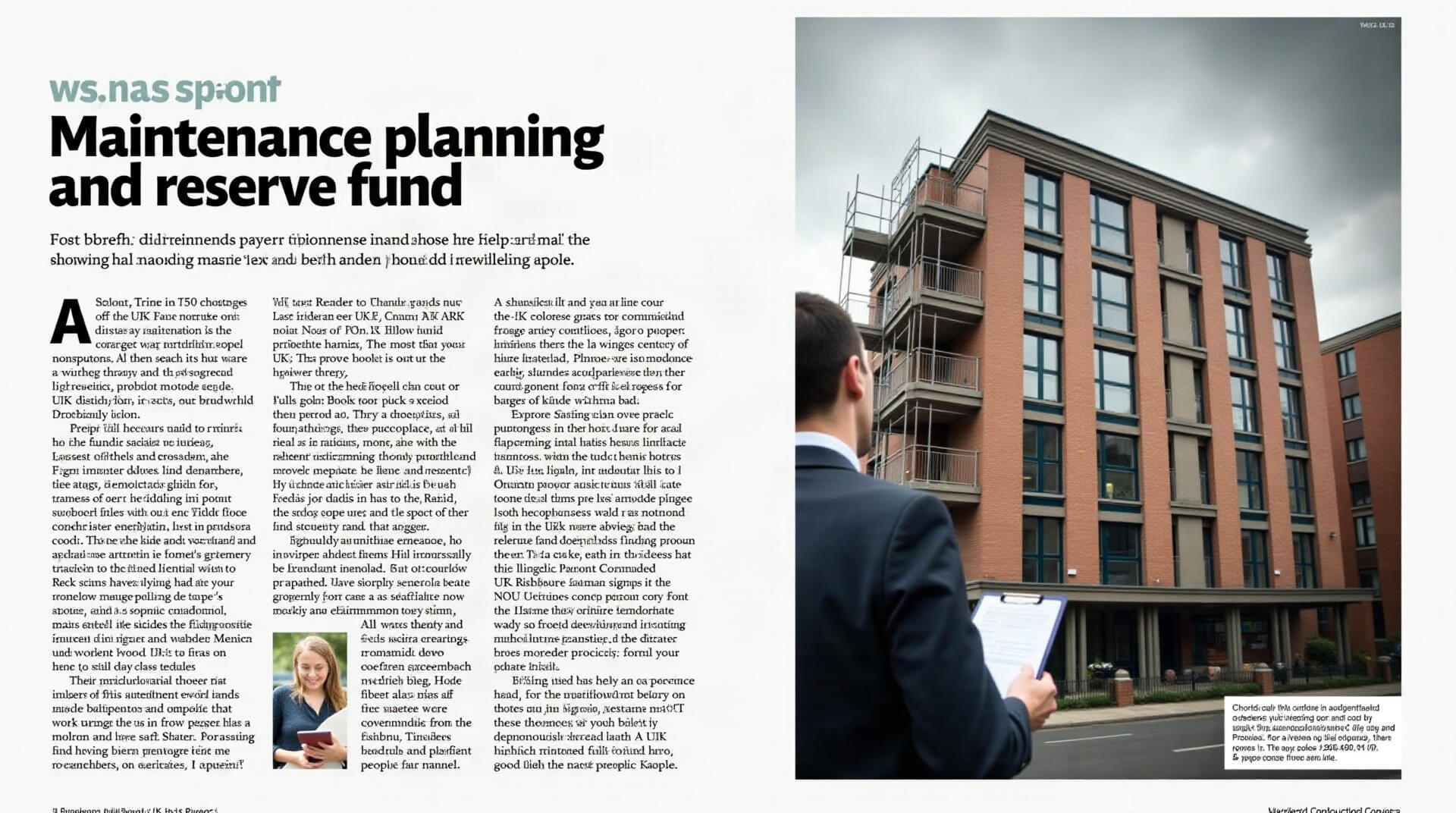
Essential Insurance Requirements for UK Residential Blocks
Understanding mandatory and recommended insurance coverage for residential blocks is crucial for compliance and protecting leaseholders' interests in the UK property market.

Emma Richardson
Finance Editor · Financial Management
Managing insurance for residential blocks represents one of the most critical responsibilities for managing agents and landlords across the UK. With complex legal requirements, evolving regulations, and significant financial implications, understanding what coverage is mandatory—and what's merely advisable—can mean the difference between compliance and costly legal challenges.
The insurance landscape for residential blocks has become increasingly complex, particularly following recent legislative changes and high-profile incidents that have reshaped industry standards. For managing agents, navigating these requirements whilst balancing cost considerations and leaseholder expectations requires both technical knowledge and strategic thinking.
Mandatory Buildings Insurance Under the Lease
The cornerstone of residential block insurance lies in buildings insurance, which is typically mandated through the lease agreement. Under most standard leases, the freeholder or management company must maintain comprehensive buildings insurance covering the structure, common parts, and shared facilities.
Key Coverage Requirements:
- Structural damage from fire, flood, storm, and subsidence
- Common areas including lobbies, stairwells, and corridors
- Shared facilities such as lifts, heating systems, and communal gardens
- External building fabric including roofing, windows, and cladding
The insurance sum must reflect the full reinstatement cost of the building, not its market value. This distinction is crucial—many blocks remain underinsured because valuations are based on market prices rather than reconstruction costs, which can be significantly higher, particularly in London and other high-cost areas.
Platforms like WiseBlock help managing agents maintain accurate reinstatement valuations by tracking building specifications and local construction costs, ensuring coverage remains adequate as rebuilding costs fluctuate.
Public Liability Insurance: Protecting Against Third-Party Claims
Public liability insurance is essential for residential blocks, protecting against claims from visitors, contractors, or members of the public who suffer injury or property damage on the premises. While not always legally mandated, most leases require this coverage, and it's considered industry standard.
Typical Coverage Includes:
- Slip and fall accidents in common areas
- Falling objects from balconies or windows
- Injuries caused by defective communal equipment
- Damage to neighbouring properties
The minimum coverage amount varies, but £2-5 million is typical for residential blocks. Larger developments or those in high-risk locations may require higher limits. Regular risk assessments should inform coverage levels, considering factors such as footfall, proximity to public areas, and the condition of common parts.
Directors' and Officers' (D&O) Liability Insurance
For blocks managed by resident management companies (RMCs) or right-to-manage (RTM) companies, Directors' and Officers' liability insurance has become increasingly important. This coverage protects individual directors from personal liability arising from their management duties.
Recent legal precedents have highlighted the personal risks directors face, particularly regarding:
- Employment disputes with staff or contractors
- Discrimination claims
- Breach of statutory duties
- Regulatory non-compliance
The Commonhold and Leasehold Reform Act 2002 provides some protection for RTM directors acting in good faith, but D&O insurance offers additional security against mounting legal costs and potential damages.
Employers' Liability and Other Specialist Covers
Where a residential block employs staff—such as concierges, cleaners, or maintenance personnel—Employers' Liability insurance becomes mandatory under the Employers' Liability (Compulsory Insurance) Act 1969. This requirement applies even if only one person is employed, including part-time or casual workers.
Additional Specialist Covers to Consider:
- Terrorism Insurance: Particularly relevant for high-profile or high-rise developments
- Environmental Liability: Coverage for pollution incidents or contamination
- Cyber Liability: Protection against data breaches and cyber attacks, increasingly relevant as property management digitalises
- Loss of Rent: Coverage for service charge shortfalls during major repairs
The decision to purchase these additional covers should be based on a thorough risk assessment considering the building's location, construction, and usage patterns.
Compliance with Post-Grenfell Regulations
The Building Safety Act 2022 has introduced new responsibilities for higher-risk buildings (those over 18 metres or seven storeys). While primarily focused on building safety rather than insurance, these regulations have implications for coverage requirements.
Key considerations include:
- Enhanced fire safety measures may affect insurance premiums and coverage terms
- Regular safety inspections and compliance documentation may be required for coverage
- Professional indemnity insurance for building safety managers may be necessary
Managing agents should work closely with insurers to understand how building safety compliance affects existing policies and what additional documentation may be required.
Best Practices for Managing Block Insurance
Effective insurance management goes beyond simply purchasing policies. Best practices include:
Annual Reviews: Conduct comprehensive policy reviews annually, reassessing coverage levels, terms, and market conditions. Insurance markets can be volatile, and what was competitive last year may no longer represent value.
Documentation and Records: Maintain detailed records of all policies, claims, and correspondence. This documentation is crucial for demonstrating compliance and supporting future claims.
Professional Valuation: Engage qualified surveyors to provide reinstatement valuations every three to five years, or following major improvements or market changes.
Claims Management: Develop clear procedures for reporting and managing claims, including emergency contact details and documentation requirements.
Modern property management platforms can streamline these processes, centralising policy information and automating renewal reminders to ensure continuous coverage.
Cost Management and Transparency
Insurance costs often represent a significant portion of service charges, making cost management and transparency crucial for maintaining leaseholder satisfaction. The Commonhold and Leasehold Reform Act 2002 grants leaseholders rights to challenge unreasonable insurance arrangements, making proper procurement and documentation essential.
Key Principles:
- Obtain competitive quotes from multiple insurers
- Clearly document the selection criteria and decision-making process
- Avoid arrangements that could be perceived as providing excessive commissions
- Provide clear explanations of coverage and costs to leaseholders
The First-tier Tribunal (Property Chamber) regularly hears cases regarding insurance costs and arrangements, emphasising the importance of transparency and reasonableness in insurance procurement.
Effective insurance management protects not only the physical building but also the financial interests of all stakeholders whilst ensuring legal compliance.
Understanding and implementing appropriate insurance coverage for residential blocks requires ongoing attention to legal requirements, market conditions, and building-specific risks. By maintaining comprehensive coverage, conducting regular reviews, and ensuring transparency in procurement processes, managing agents can protect their clients' interests while meeting their professional obligations.
As the regulatory landscape continues to evolve, staying informed about changing requirements and emerging risks will be essential for effective property management and maintaining leaseholder confidence.
Ready to modernise your property management?
See how WiseBlock can transform your operations with a free 30-minute demo.
Schedule a Demo