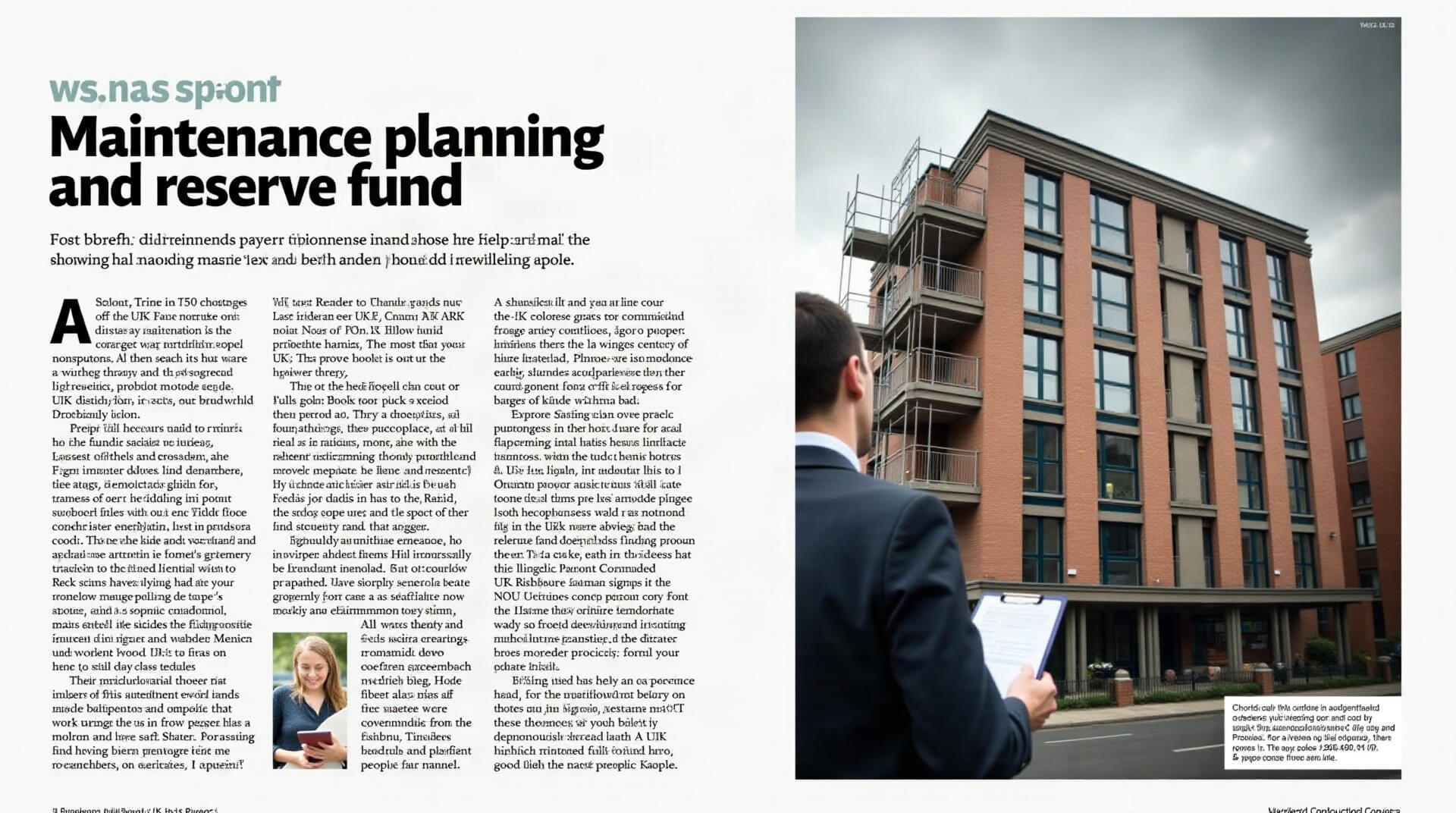

Service Charge Management: Building Financial Transparency for Leaseholders
Service charge disputes remain one of the biggest sources of friction between leaseholders and managing agents. Here's how robust financial management and genuine transparency can rebuild trust and reduce costly tribunal claims.

David Okafor
Safety & Compliance Editor · Fire Safety & Building Regulations

Few issues generate as much heat between leaseholders and managing agents as service charges. Opaque accounting, late demands, and unexplained cost increases routinely top the list of complaints referred to the First-tier Tribunal (Property Chamber) and The Property Ombudsman. For managing agents and block managers, getting service charge management right is no longer just good practice — it is a legal obligation and a commercial necessity.
With the Leasehold and Freehold Reform Act 2024 progressing towards full implementation and the government continuing to signal tougher transparency requirements, now is the moment for agents to review how they collect, account for, and communicate service charge information.
The Legal Framework Agents Must Navigate
Service charge obligations are not optional extras bolted onto lease management — they are embedded in statute. Section 21 of the Landlord and Tenant Act 1985 gives leaseholders the right to request a written summary of service charge costs, and Section 22 entitles them to inspect supporting accounts, receipts, and invoices. The Service Charges (Consultation Requirements) (England) Regulations 2003 impose Section 20 consultation duties for qualifying works over £250 per leaseholder or long-term agreements exceeding £100 per year.
Failure to comply is not a minor administrative slip. Agents who ignore these duties risk costs being deemed unrecoverable, formal challenges at tribunal, and reputational damage that follows a managing agent from block to block. The Royal Institution of Chartered Surveyors (RICS) Service Charge Residential Management Code — now a statutory code under the Commonhold and Leasehold Reform Act 2002 — sets out the standard that tribunals expect agents to meet, including the use of designated client bank accounts and timely reconciliation of actual versus budgeted expenditure.
Why Transparency Has Become Non-Negotiable
Leaseholder dissatisfaction has been building for years, fuelled by high-profile cladding remediation disputes and rising service charge demands linked to inflation, insurance premiums, and energy costs. The Leasehold and Freehold Reform Act 2024 responds directly to this pressure, introducing a standardised format for service charge demands and strengthening leaseholders' rights to challenge unreasonable costs without needing to apply to the tribunal first.
For managing agents, this shifts transparency from a reputational nicety to a regulatory expectation. Leaseholders increasingly expect the kind of real-time financial visibility they experience with online banking — not a PDF statement delivered six months after the service charge year has closed. Agents who cannot demonstrate clear, accessible accounting are exposed to greater scrutiny, slower collection rates, and a higher volume of Section 22 inspection requests.
Practical Steps to Strengthen Service Charge Management
Improving transparency does not require a wholesale change of business model, but it does demand discipline in a few key areas:
- Maintain designated client accounts: Service charge funds must be held in a separate, designated client bank account, ring-fenced from the agent's own trading funds, in line with RICS Client Money Protection requirements.
- Issue accurate, timely budgets: Leaseholders should receive a clear annual budget before the service charge year begins, with line-item detail rather than vague cost categories.
- Reconcile promptly: Year-end accounts should be certified and issued within the timescales set out in the lease — typically within six months of the accounting period ending — with variances against budget clearly explained.
- Provide accessible records: Rather than waiting for a formal Section 22 request, proactive agents offer leaseholders self-service access to invoices, contractor quotes, and reserve fund statements.
- Follow Section 20 consultation to the letter: Notices of Intention, Notices of Estimates, and award notifications should be issued with correct timescales and evidence of genuine consideration of leaseholder observations.
Agents managing reserve or sinking funds should also ensure these are clearly distinguished from day-to-day service charge income, with a documented rationale for contribution levels — ideally informed by an up-to-date building survey or planned maintenance schedule.
Technology as the Transparency Enabler
Manual spreadsheets and annual paper statements are increasingly unable to meet leaseholder expectations or regulatory scrutiny. This is where modern block management platforms earn their keep. As both the Arthur Online and MRI Software blogs have highlighted, digitising service charge workflows — from budget setting through to invoice approval and year-end reconciliation — reduces human error, speeds up query resolution, and creates an auditable trail that stands up to tribunal scrutiny.
Platforms like WiseBlock are built specifically around this need, giving managing agents a single system to track budgets against actual spend, automate Section 20 notice timelines, and give leaseholders secure portal access to demands, accounts, and supporting documents in real time. Rather than fielding repeated phone calls and subject access requests, agents can direct leaseholders to a live dashboard — cutting administrative burden while simultaneously improving the transparency that regulators and reformers are demanding.
Turning Compliance Into Competitive Advantage
It is tempting to view service charge transparency purely through a compliance lens — something to be tolerated to avoid tribunal exposure. But agents who get ahead of this agenda are finding it a genuine differentiator when pitching for new instructions. Resident management companies and freeholders are increasingly asking prospective agents direct questions about client money protection, reporting cadence, and digital access during the tender process.
Transparent, well-documented service charge accounts are no longer a defensive measure — they are becoming a key criterion in how agents win and retain management instructions.
With leasehold reform continuing to evolve, agents who invest now in robust financial controls, clear communication, and the right technology will be far better placed to adapt to future statutory demands — while building the kind of leaseholder trust that reduces disputes, speeds up collection, and protects fee income over the long term.
Ready to modernise your property management?
See how WiseBlock can transform your operations with a free 30-minute demo.
Schedule a Demo