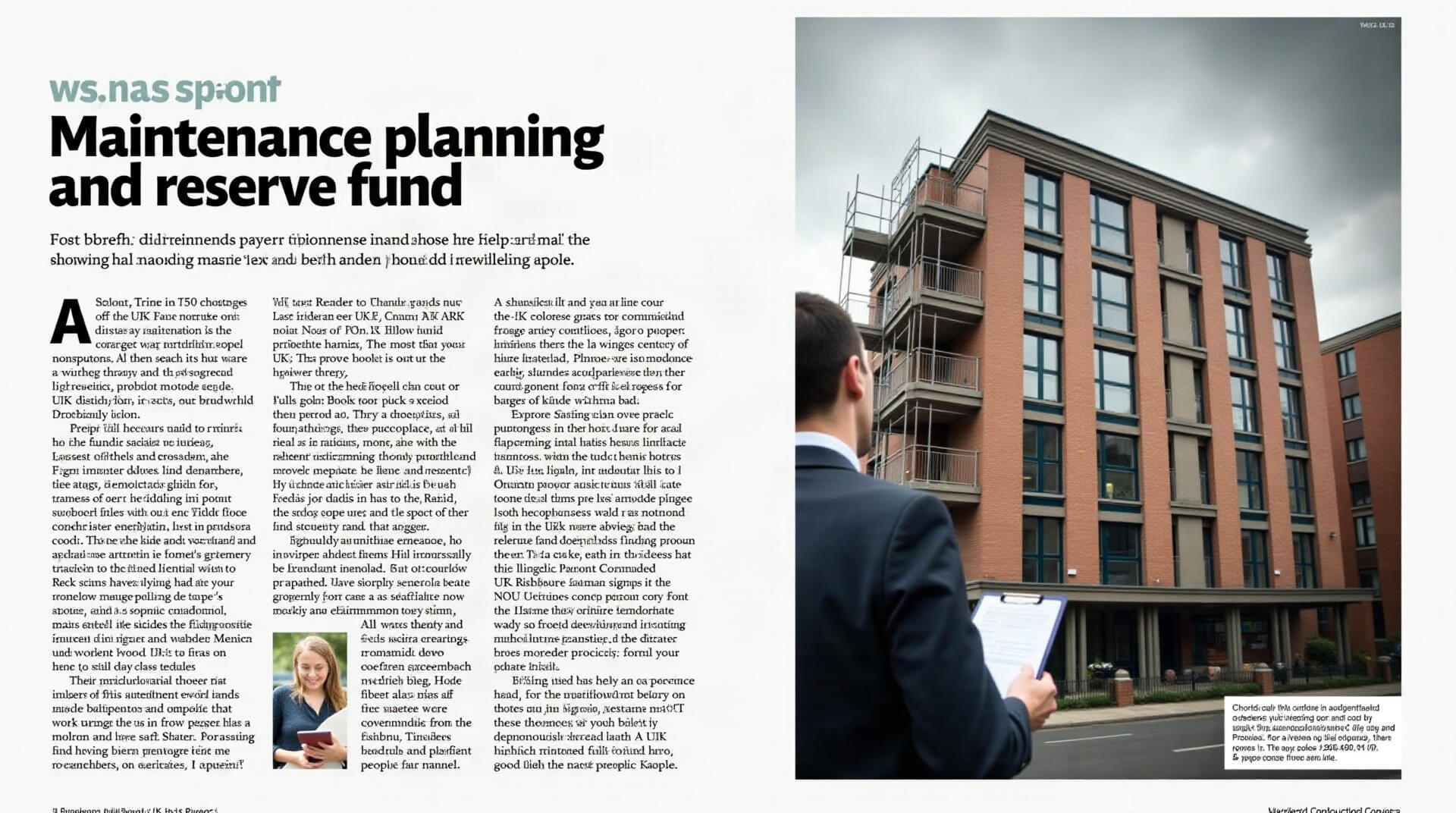

Service Charge Management: Building Financial Transparency for Leaseholders
Service charge disputes remain one of the biggest sources of leaseholder complaints in the UK. Here's how managing agents can use transparent financial management and modern technology to build trust and stay compliant.

James Crawford
Technology Correspondent · PropTech & Innovation

Service charges are, by a considerable margin, the single biggest source of friction between leaseholders and managing agents. According to the Leasehold Advisory Service (LEASE), disputes over service charges account for the majority of applications made to the First-tier Tribunal (Property Chamber) each year. In an era of rising building insurance premiums, cladding remediation costs, and general inflationary pressure on maintenance contracts, the demand for clear, accurate, and timely financial reporting has never been higher.
For managing agents, this is not simply a matter of good customer service. It is a legal obligation, a professional standard, and increasingly a competitive differentiator. Agents who get service charge transparency right retain clients, reduce disputes, and build reputations that support business growth. Those who don't face tribunal costs, reputational damage, and the very real risk of losing management instructions.
The Legal Framework Agents Must Navigate
Service charge accounting in England and Wales sits within a dense regulatory framework. Section 21 of the Landlord and Tenant Act 1985 gives leaseholders the right to a written summary of costs, while Sections 22 and 23 grant rights to inspect supporting accounts, receipts, and invoices. The Service Charges (Summaries of Rights and Obligations, and Transitional Provision) (England) Regulations 2007 further prescribe how this information must be presented.
On top of statute, the RICS Service Charge Residential Management Code sets out best-practice standards that most professional agents are expected to follow, including that service charge accounts should generally be certified by an accountant and issued to leaseholders within a reasonable timeframe of the year end. Failure to comply with these obligations doesn't just risk tribunal referral under Section 27A of the 1985 Act; it can also give leaseholders grounds to withhold payment entirely.
With the Leasehold and Freehold Reform Act 2024 now progressing towards implementation, the direction of travel is unmistakable: leaseholders will be entitled to more granular, more frequent, and more standardised financial information. Agents who build robust reporting infrastructure now will be far better placed than those scrambling to comply once the secondary legislation lands.
Why Transparency Matters Beyond Compliance
Leaseholders are not passive recipients of service charge demands — they are, in effect, paying customers of a service they rarely feel they can scrutinise. Research repeatedly cited by industry commentators, including analysis published by Arthur Online, points to a persistent trust deficit between leaseholders and their managing agents, often rooted not in mismanagement itself but in poor communication about how money is spent.
A leaseholder who can see, in real time, that their contribution to the reserve fund is being tracked correctly, that reactive maintenance invoices are itemised, and that the current year's budget is tracking against forecast is far less likely to raise a formal complaint — even when charges increase. Transparency reduces disputes not by lowering costs, but by removing the information asymmetry that breeds suspicion.
Most service charge disputes are not really about the money. They are about leaseholders feeling they have no visibility into how decisions were made.
Common Pitfalls in Service Charge Administration
- Delayed year-end accounts: Missing the RICS Code's recommended timeframes erodes trust before a single figure has even been reviewed.
- Vague budget narratives: A budget that simply states "repairs and maintenance: £45,000" without context invites challenge. Leaseholders want to understand assumptions, not just totals.
- Poor reserve fund communication: Under-explained or apparently arbitrary reserve/sinking fund contributions are a frequent trigger for Tribunal applications.
- Manual reconciliation errors: Spreadsheet-based accounting across large portfolios significantly increases the risk of apportionment mistakes, particularly on mixed-use developments with variable lease terms.
- Inconsistent communication channels: Leaseholders chasing information via email, phone, and post simultaneously creates duplicated effort and inconsistent answers.
How Technology Is Changing the Standard
The shift towards cloud-based property management platforms is fundamentally changing what leaseholders now expect as a baseline, not a bonus. Both MRI Software and Arthur Online have highlighted how automated service charge workflows — from budget-setting through to year-end reconciliation — reduce administrative burden while simultaneously improving audit trails.
This is precisely where platforms like WiseBlock are reshaping expectations in block and estate management. By giving leaseholders secure, real-time access to service charge accounts, budget breakdowns, and supporting documentation through a dedicated portal, agents can dramatically reduce the volume of routine enquiries while simultaneously strengthening their compliance position. When every invoice, payment, and reserve fund movement is logged and accessible, Section 22 requests become a formality rather than an administrative fire drill.
Digital record-keeping also supports the certification process required under the RICS Code, since accountants and auditors can access a clean, timestamped ledger rather than reconstructing a year's transactions from disparate spreadsheets and email threads. For agents managing large or growing portfolios, this efficiency gain is not marginal — it is often the difference between scaling profitably and drowning in administrative overhead.
Practical Steps for Improving Transparency
- Issue budgets with narrative explanations, not just line-item figures, particularly where costs have increased year-on-year.
- Adopt a consistent, published timetable for issuing certified accounts, and communicate proactively if there is any risk of delay.
- Provide leaseholders with digital access to invoices and supporting evidence rather than waiting for formal Section 21/22 requests.
- Explain reserve fund strategy clearly, ideally with reference to a section 20 major works forecast or a long-term maintenance plan.
- Use software that generates an audit trail automatically, reducing reliance on manual reconciliation and lowering the risk of apportionment errors.
Looking Ahead
As the Leasehold and Freehold Reform Act 2024 moves through implementation, and as leaseholders become increasingly digitally literate and less tolerant of opaque administration, the agents who thrive will be those who treat financial transparency as a core service offering rather than a compliance chore. Investing in the right systems now — whether through dedicated leaseholder portals, automated reconciliation, or clearer budget communication — is not just good governance. It is fast becoming the standard by which professional managing agents are judged.
Ready to modernise your property management?
See how WiseBlock can transform your operations with a free 30-minute demo.
Schedule a Demo