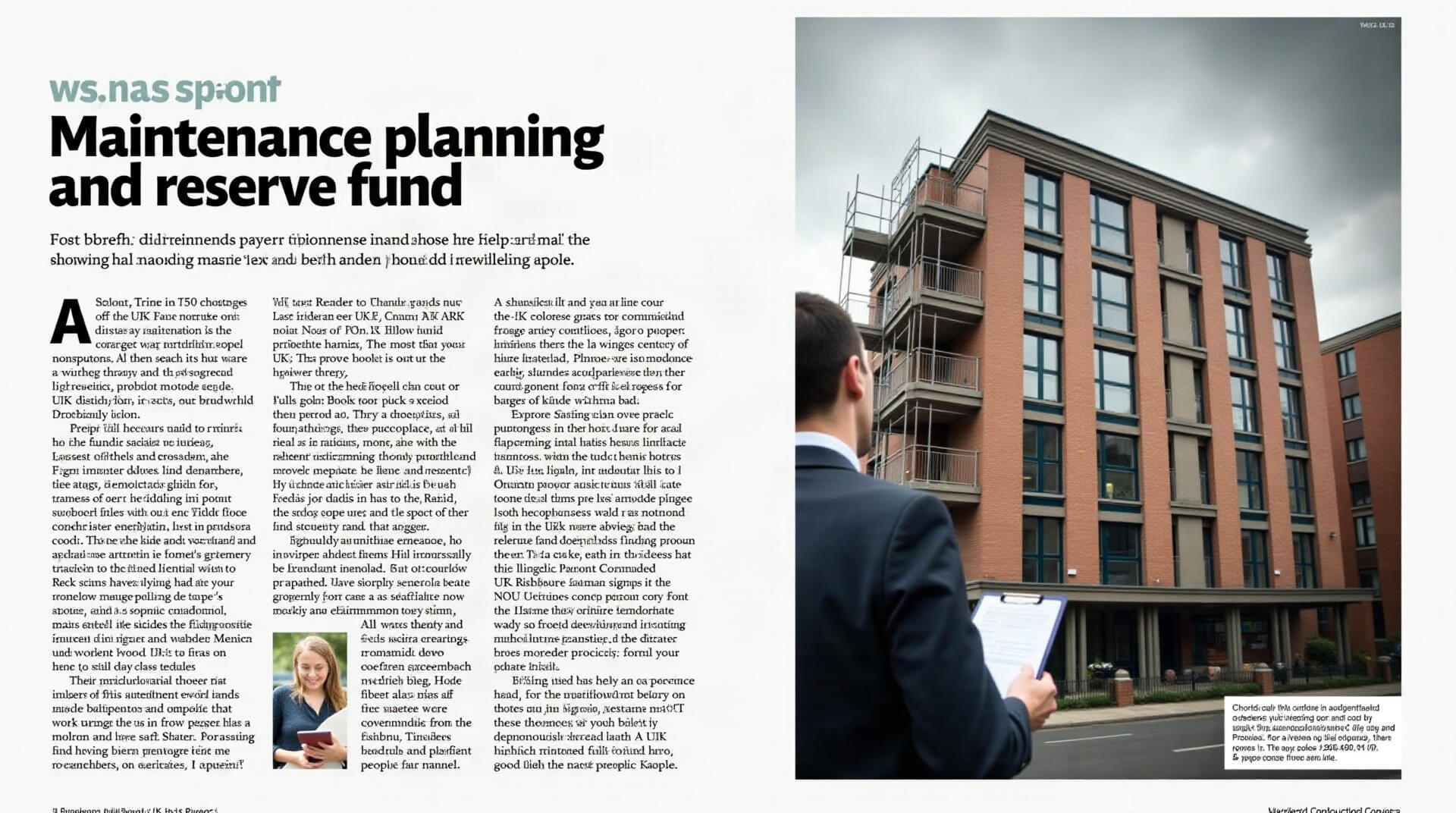
Strategic Maintenance Planning: Building Robust Reserve Funds for UK Properties
Effective maintenance planning and reserve fund strategies are essential for UK property managers to ensure long-term financial stability and avoid costly emergency repairs that burden leaseholders.

Priya Sharma
Innovation Correspondent · AI & Digital Transformation

For UK managing agents and property managers, the art of maintenance planning extends far beyond fixing broken lifts and patching leaky roofs. It's about creating a comprehensive financial strategy that protects both the physical asset and the leaseholders' long-term interests. With the Building Safety Act 2022 placing greater emphasis on proactive building management, robust maintenance planning and reserve fund strategies have never been more critical.
Understanding Your Legal Framework
The legal landscape surrounding maintenance planning in the UK is both complex and evolving. Under the Landlord and Tenant Act 1985, managing agents have a statutory duty to maintain the structure and exterior of buildings, whilst the Commonhold and Leasehold Reform Act 2002 provides specific guidance on service charge demands and reserve funds.
The recent Building Safety Act 2022 has introduced additional responsibilities, particularly for high-rise residential buildings. Principal Accountable Persons must now demonstrate comprehensive maintenance planning as part of their safety case, making strategic reserve fund management not just good practice, but a regulatory requirement.
Key legal considerations include:
- Section 20 consultation requirements for major works exceeding £250 per leaseholder
- Reserve fund provisions under lease terms and the RICS Service Charge Code
- Transparency requirements under the Commonhold and Leasehold Reform Act
- Building safety compliance costs under the new regulatory regime
Developing a Strategic Maintenance Framework
Effective maintenance planning begins with a thorough understanding of your building's lifecycle and the predictable patterns of component replacement and repair. A strategic approach involves creating a planned preventative maintenance (PPM) schedule that addresses both routine upkeep and major capital expenditure.
Start by conducting a comprehensive building condition survey, ideally undertaken by chartered surveyors with expertise in your property type. This survey should identify:
- Current condition of major building components (roof, external walls, mechanical systems)
- Expected remaining useful life of each element
- Estimated replacement or refurbishment costs
- Health and safety compliance requirements
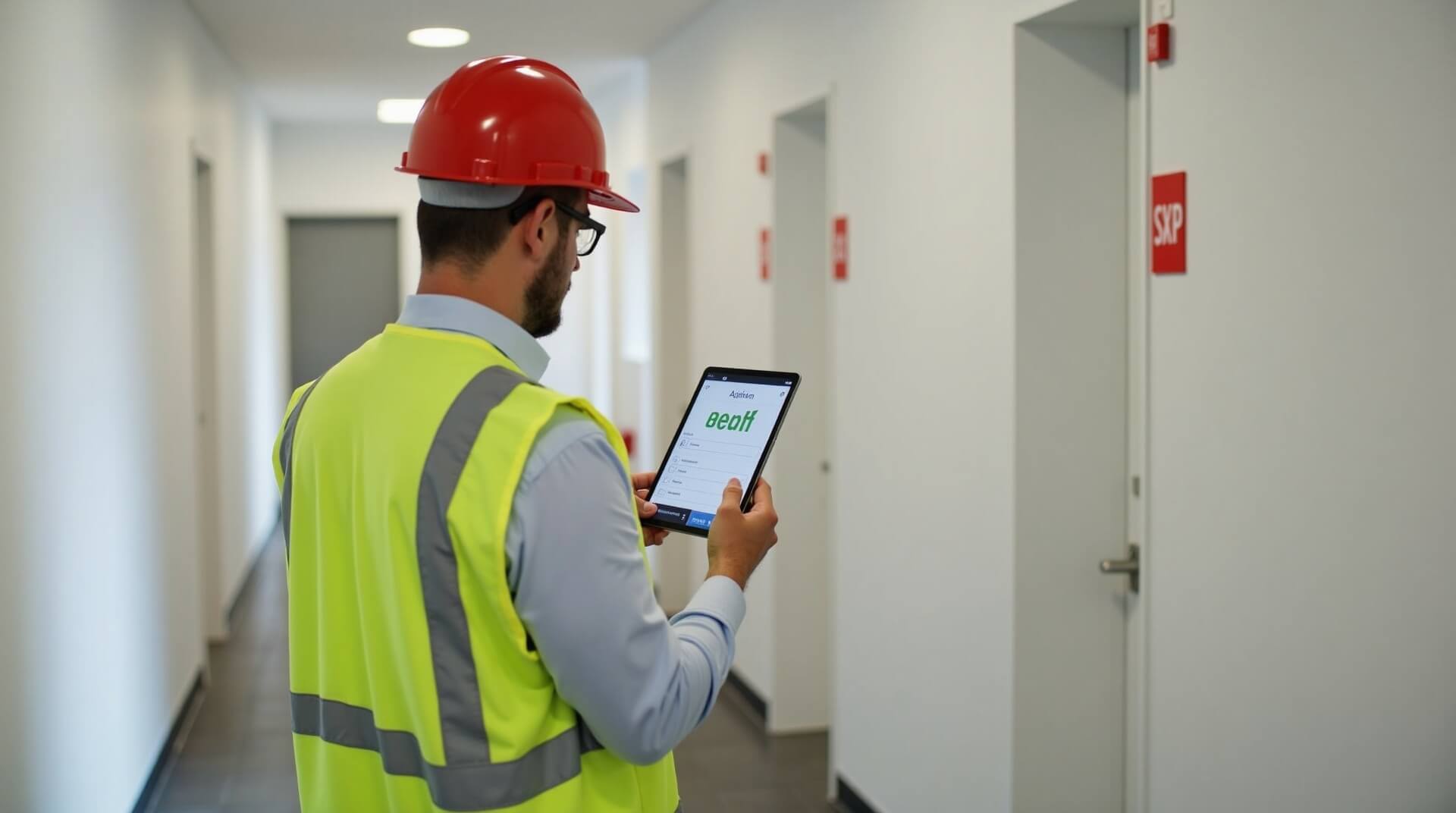
Modern platforms like WiseBlock enable managing agents to digitise this information, creating dynamic maintenance schedules that automatically adjust based on building performance data and regulatory changes. This technological approach ensures nothing falls through the cracks whilst providing clear audit trails for leaseholder transparency.
Reserve Fund Calculation and Management
The RICS Service Charge Code emphasises that reserve funds should be established for "items of expenditure which arise at intervals of more than 12 months." However, calculating appropriate reserve levels requires sophisticated financial modelling that considers multiple variables.
Best practice reserve fund calculation involves:
Annual reserve contribution = (Total estimated cost of component replacement ÷ Expected useful life) × Inflation adjustment factor
For example, if a lift system costs £150,000 to replace and has a 25-year lifespan, the annual reserve requirement would be £6,000, adjusted for inflation and financing costs. However, this simplistic calculation doesn't account for the time value of money or varying replacement schedules.
More sophisticated approaches use net present value (NPV) calculations that consider:
- Interest earning potential of reserve funds
- Inflation rates specific to construction costs
- Staggered replacement schedules
- Emergency contingency requirements (typically 10-15% of total reserves)
Technology-Enabled Financial Planning
The integration of technology into maintenance planning represents a paradigm shift for UK property management. Advanced platforms now offer predictive maintenance capabilities that use IoT sensors and machine learning to anticipate component failures before they occur.
Digital solutions provide several advantages:
- Real-time monitoring: IoT sensors can track HVAC performance, water usage, and structural movement
- Predictive analytics: Machine learning algorithms identify patterns that indicate impending failures
- Automated compliance: Systems automatically generate Section 20 notices and consultation documents
- Financial transparency: Real-time dashboards show reserve fund balances and projected expenditure
Platforms like WiseBlock integrate these capabilities into comprehensive property management ecosystems, enabling managing agents to shift from reactive to proactive maintenance strategies whilst maintaining full regulatory compliance.
Stakeholder Communication and Transparency
Even the most sophisticated maintenance planning fails without effective stakeholder communication. The Commonhold and Leasehold Reform Act places significant emphasis on transparency, requiring managing agents to provide clear, understandable information about service charges and reserve fund usage.
Effective communication strategies include:
- Annual maintenance reports showing completed works and upcoming projects
- Clear explanations of reserve fund calculations and projected expenditure
- Regular updates on building condition and safety compliance
- Accessible online portals where leaseholders can track service charge expenditure
Transparency isn't just about compliance—it builds trust and reduces disputes. When leaseholders understand the rationale behind reserve fund contributions and can see how their money is being invested in building preservation, they're more likely to support necessary expenditure.
Future-Proofing Your Maintenance Strategy
The property management landscape continues to evolve rapidly, driven by climate change requirements, building safety regulations, and technological advancement. Successful maintenance planning must anticipate these changes and build flexibility into long-term strategies.
Key considerations for future-proofing include:
- Net zero compliance: Planning for energy efficiency improvements and renewable energy installations
- Building safety evolution: Anticipating additional regulatory requirements following the Grenfell inquiry
- Technology integration: Preparing infrastructure for smart building systems and IoT monitoring
- Climate resilience: Planning for extreme weather events and their impact on building systems
The most successful managing agents are those who view maintenance planning not as a cost centre, but as a strategic investment in long-term asset value and leaseholder satisfaction. By combining regulatory compliance with innovative technology and transparent communication, they create sustainable financial frameworks that protect both buildings and the people who live and work in them.
As the UK property sector continues to professionalise and digitise, those who embrace strategic maintenance planning and robust reserve fund management will find themselves best positioned to navigate an increasingly complex regulatory environment whilst delivering exceptional value to their clients.
Ready to modernise your property management?
See how WiseBlock can transform your operations with a free 30-minute demo.
Schedule a Demo