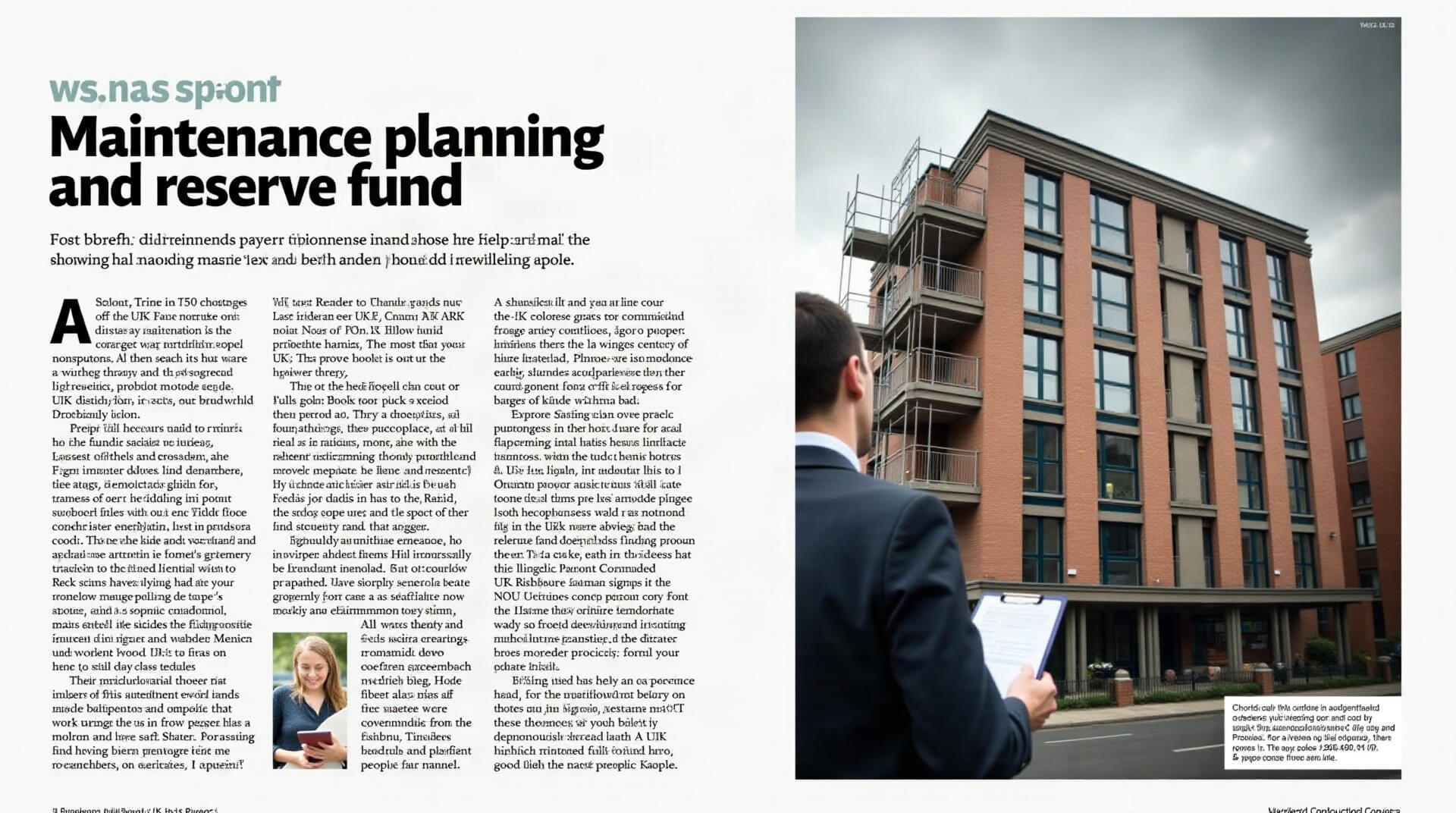

Service Charge Management: Building Trust Through Financial Transparency
Effective service charge management requires clear communication and robust financial transparency to build trust with leaseholders and ensure compliance with UK regulations.

David Okafor
Safety & Compliance Editor · Fire Safety & Building Regulations

Service charges remain one of the most contentious aspects of leasehold property management in the UK. With increasing scrutiny from leaseholders and evolving regulatory requirements, managing agents and landlords must prioritise financial transparency to maintain trust and comply with their legal obligations.
Understanding Your Legal Obligations
Under the Landlord and Tenant Act 1985, leaseholders have fundamental rights regarding service charge transparency. Section 21 requires landlords to provide a summary of costs incurred within six months of the end of the accounting period, whilst Section 22 grants leaseholders the right to inspect accounts and receipts.
The Commonhold and Leasehold Reform Act 2002 further strengthened these requirements, mandating that service charge demands must include a summary of leaseholders' rights and be accompanied by relevant certificates where applicable. Failure to comply can result in service charges becoming unenforceable until proper procedures are followed.
Recent legislative developments, including provisions within the Building Safety Act 2022, have placed additional emphasis on transparency, particularly regarding building safety costs. Managing agents must now provide detailed breakdowns of safety-related expenditure and demonstrate value for money in their procurement processes.
Best Practices for Service Charge Collection and Management
Effective service charge management begins with clear, comprehensive budgeting. Annual budgets should be realistic, well-documented, and communicated to leaseholders in advance. Consider implementing these practices:
- Quarterly reporting: Provide regular updates on expenditure against budget, highlighting any significant variances
- Detailed invoicing: Ensure service charge demands clearly itemise costs and reference relevant lease clauses
- Reserve fund planning: Maintain adequate reserves for major works and communicate long-term expenditure forecasts
- Procurement transparency: Document tender processes and demonstrate competitive pricing for major contracts
Modern property management platforms can significantly streamline these processes. WiseBlock's integrated financial management tools, for example, enable managing agents to maintain real-time visibility of service charge accounts whilst automatically generating compliant documentation for leaseholders.
Building Trust Through Proactive Communication
Financial transparency extends beyond statutory requirements. Proactive communication builds trust and reduces disputes before they escalate. Successful managing agents typically:
Hold regular meetings: Annual general meetings provide opportunities to discuss financial performance, upcoming projects, and leaseholder concerns. Consider supplementing these with informal updates or newsletters.
Provide accessible explanations: Technical financial documents should be accompanied by plain English summaries explaining key decisions and their impact on service charges.
Maintain open dialogue: Establish clear channels for leaseholder queries and ensure prompt, comprehensive responses. This demonstrates accountability and prevents minor issues from escalating.
"Transparency isn't just about compliance – it's about building lasting relationships with leaseholders based on trust and mutual respect. When residents understand how their money is being spent and why decisions are made, they're far more likely to support necessary expenditure."
Managing Major Works and Section 20 Consultations
Major works often represent the greatest challenge to service charge management, both financially and in terms of leaseholder relations. The Section 20 consultation process under the Landlord and Tenant Act 1985 requires careful navigation:
Stage 1 consultation must describe proposed works and invite initial observations. Provide sufficient detail for leaseholders to understand the scope and necessity of works, including any safety or compliance drivers.
Stage 2 consultation involves sharing contractor estimates and allowing further comment. Ensure estimates are comparable and highlight evaluation criteria beyond price, such as contractor experience and proposed methodologies.
Throughout the process, maintain detailed records of all communications and decisions. This documentation proves invaluable if disputes arise or if you need to demonstrate compliance with consultation requirements.
Leveraging Technology for Enhanced Transparency
Digital platforms are revolutionising service charge management by providing unprecedented transparency and efficiency. Key technological solutions include:
Real-time financial reporting: Cloud-based systems enable leaseholders to access up-to-date account information, reducing queries and building confidence in financial management.
Document management: Digital storage systems ensure all relevant documentation is easily accessible for inspection, supporting compliance with statutory requirements.
Automated compliance: Modern platforms can automatically generate Section 20 notices, service charge demands, and other statutory documentation, reducing administrative burden whilst ensuring consistency.
Platforms like WiseBlock integrate these capabilities, enabling managing agents to provide comprehensive financial transparency whilst streamlining administrative processes. This dual benefit of improved compliance and operational efficiency represents a significant competitive advantage in today's demanding market.
Preparing for Future Regulatory Changes
The regulatory landscape continues to evolve, with the government's leasehold reform programme promising significant changes to service charge management. Key areas to monitor include:
- Enhanced rights for leaseholders to challenge service charges
- Stricter requirements for reserve fund management
- Improved dispute resolution mechanisms
- Greater transparency obligations for managing agents
Proactive managing agents should already be implementing best practices that exceed current requirements, positioning themselves ahead of regulatory change whilst building stronger relationships with leaseholders.
Service charge management success ultimately depends on treating transparency not as a compliance burden, but as an opportunity to demonstrate professionalism and build trust. By embracing financial transparency and leveraging modern technology, managing agents can transform one of property management's greatest challenges into a competitive advantage.
Ready to modernise your property management?
See how WiseBlock can transform your operations with a free 30-minute demo.
Schedule a Demo