
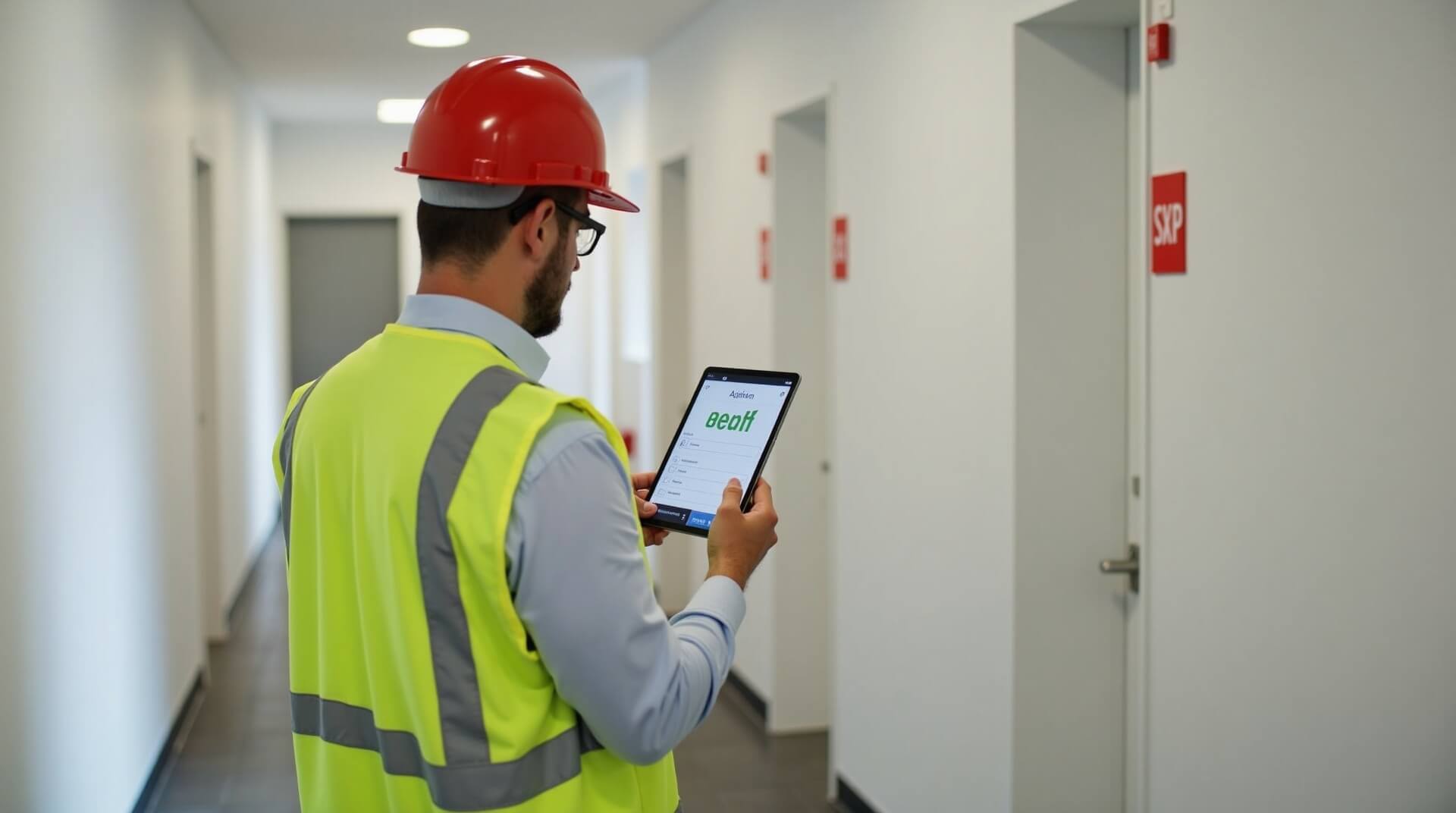
AI Revolution: How Automation is Transforming Block Management Operations
Artificial intelligence and automation are revolutionising how block managers handle everything from maintenance scheduling to financial reporting, offering unprecedented efficiency gains and cost savings for residential developments across the UK.

Emma Richardson
Finance Editor · Financial Management

The property management industry is experiencing a technological revolution, with artificial intelligence (AI) and automation at the forefront of operational transformation. For UK block managers overseeing residential developments, these innovations represent more than just efficiency gains—they're reshaping the fundamental approach to building management, resident services, and financial oversight.
As the complexity of modern residential blocks increases and resident expectations continue to rise, traditional management methods are proving inadequate. Forward-thinking managing agents are now embracing AI-powered solutions to streamline operations, reduce costs, and deliver superior service levels.
Predictive Maintenance: From Reactive to Proactive
One of the most significant applications of AI in block management lies in predictive maintenance. Traditional reactive maintenance approaches—waiting for equipment to fail before addressing issues—are not only costly but can lead to serious disruptions for residents and potential breaches of statutory obligations under the Landlord and Tenant Act 1985.
AI-powered systems can now analyse data from IoT sensors, historical maintenance records, and environmental conditions to predict when equipment is likely to fail. For example, lift systems equipped with smart sensors can monitor vibration patterns, temperature fluctuations, and usage frequency to alert managers weeks before a potential breakdown occurs.
Key benefits include:
- Reduced emergency callout costs by up to 40%
- Extended equipment lifespan through optimised maintenance scheduling
- Improved resident satisfaction through minimised service disruptions
- Better compliance with health and safety regulations
Modern platforms like WiseBlock are integrating these predictive capabilities directly into their management dashboards, allowing block managers to prioritise maintenance tasks based on AI-generated risk assessments and cost-benefit analyses.
Automated Financial Management and Reporting
Financial administration represents a significant portion of a block manager's workload, particularly with the increased scrutiny following the implementation of The Property Management (Regulation) Act 2022. AI automation is transforming this landscape by streamlining invoice processing, budget forecasting, and compliance reporting.
Intelligent document processing systems can now automatically extract data from supplier invoices, categorise expenses according to RICS service charge codes, and flag discrepancies for manual review. This automation reduces processing time by up to 70% whilst improving accuracy and maintaining detailed audit trails.
Advanced AI applications in financial management include:
- Automated service charge calculations and apportionments
- Predictive budgeting based on historical spending patterns and market trends
- Real-time variance analysis and alerting
- Automated generation of statutory financial reports
These systems also enhance transparency—a key requirement under current regulations—by providing residents with real-time access to financial information and automatically generating the detailed breakdowns required for service charge demands under Section 21B of the Landlord and Tenant Act 1985.
Enhanced Resident Communication and Service Delivery
AI-powered chatbots and communication systems are revolutionising how block managers interact with residents. These systems can handle routine enquiries 24/7, from booking communal facilities to reporting maintenance issues, freeing up management teams to focus on more complex matters.
Natural language processing enables these systems to understand context and sentiment, ensuring appropriate responses and escalation when necessary. For instance, a resident reporting a "slight water leak" might receive standard guidance, whilst one mentioning "water pouring through the ceiling" would trigger immediate emergency protocols.
"The integration of AI communication tools has reduced our routine enquiry volume by 60%, allowing our team to provide more personalised service for complex issues whilst ensuring residents receive immediate responses to common questions."
Advanced systems can also proactively communicate with residents, sending automated updates about planned maintenance, policy changes, or important building announcements, ensuring compliance with consultation requirements under Section 20 of the Landlord and Tenant Act 1985.
Data-Driven Decision Making and Compliance
AI's ability to process vast amounts of data is proving invaluable for strategic decision-making in block management. By analysing patterns across maintenance requests, energy consumption, resident feedback, and financial performance, AI systems can identify optimisation opportunities that would be impossible to spot manually.
For example, analysis of heating and cooling patterns might reveal opportunities for smart building automation that could reduce energy costs by 25-30% whilst maintaining resident comfort. Similarly, pattern recognition in maintenance requests can identify systematic issues that require capital investment rather than ongoing repairs.
Compliance benefits are equally significant:
- Automated tracking of statutory inspection dates and renewal requirements
- Real-time monitoring of health and safety compliance metrics
- Automated generation of regulatory reports for bodies like the Property Ombudsman
- Continuous monitoring of service charge reasonableness against market benchmarks
Implementation Challenges and Best Practices
Whilst the benefits of AI and automation in block management are substantial, successful implementation requires careful planning and consideration of potential challenges. Data quality remains paramount—AI systems are only as effective as the data they process, making it essential to establish robust data collection and validation processes.
Privacy and data protection considerations are also crucial, particularly with the increasing amount of personal data being processed. Managing agents must ensure compliance with GDPR and implement appropriate security measures to protect resident information.
Best practice recommendations include:
- Starting with pilot projects in specific operational areas before full-scale implementation
- Investing in staff training to ensure effective utilisation of new technologies
- Establishing clear data governance policies and security protocols
- Regular review and refinement of AI algorithms to ensure continued effectiveness
The future of block management lies in the intelligent integration of AI and automation technologies. Managing agents who embrace these innovations today will be better positioned to deliver superior service levels, achieve operational efficiencies, and meet the evolving expectations of residents and regulatory bodies.
As these technologies continue to mature and become more accessible, the question for block managers isn't whether to adopt AI and automation, but rather how quickly they can implement these transformative tools to maintain their competitive edge in an increasingly sophisticated market.
Ready to modernise your property management?
See how WiseBlock can transform your operations with a free 30-minute demo.
Schedule a Demo