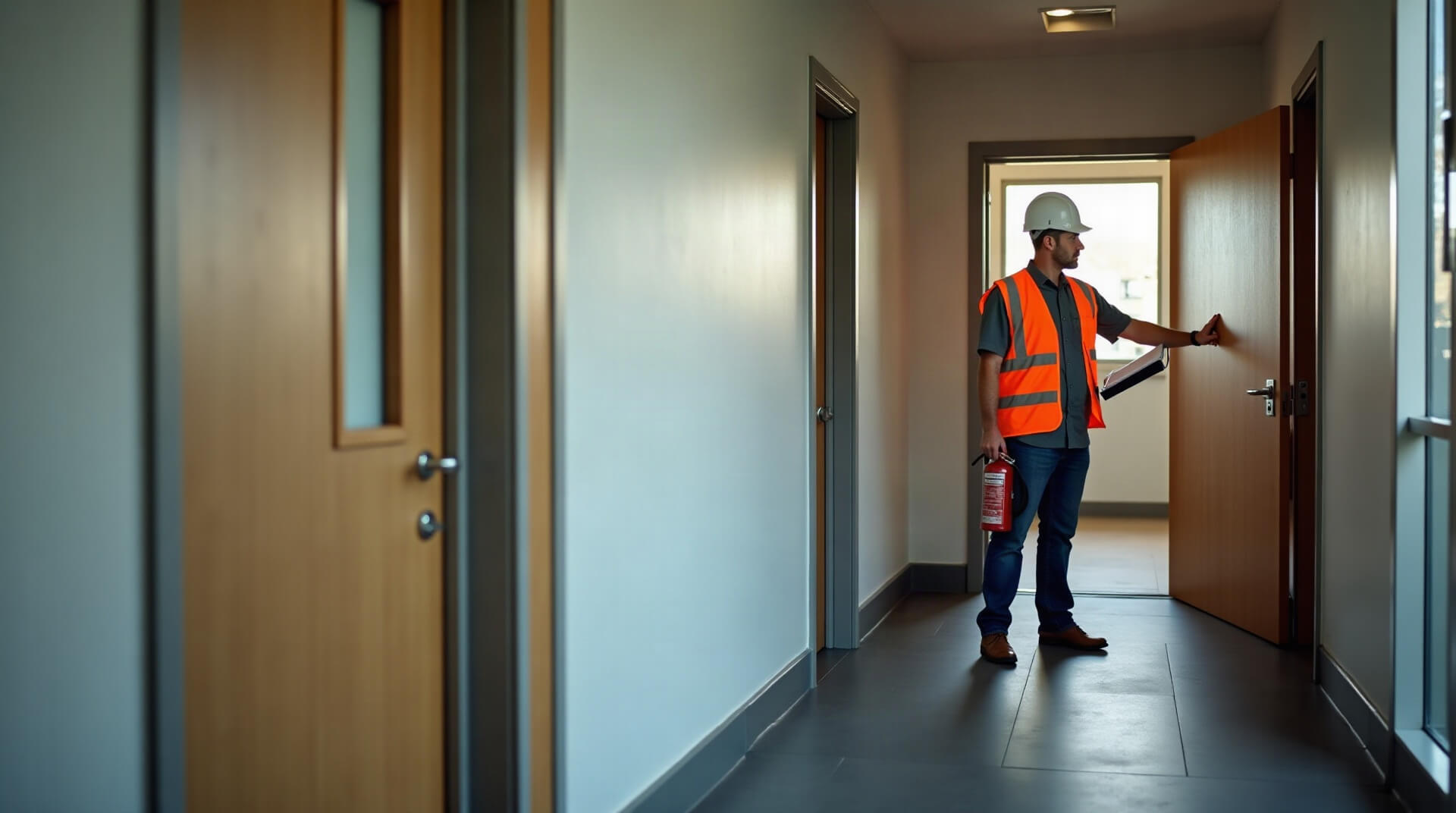

Fire Risk Assessment Types, Requirements, and Common Mistakes
Understanding the different types of fire risk assessments, legal requirements, and avoiding costly compliance mistakes that could put residents at risk and expose property managers to liability.

James Crawford
Technology Correspondent · PropTech & Innovation

Fire risk assessments are a cornerstone of building safety compliance in the UK, yet they remain one of the most misunderstood aspects of property management. Following high-profile incidents and legislative changes, the requirements have become increasingly stringent, making it essential for managing agents and landlords to understand exactly what's required and where things commonly go wrong.
Legal Framework and Requirements
Under the Regulatory Reform (Fire Safety) Order 2005, all non-domestic premises and common areas of residential buildings must have a suitable and sufficient fire risk assessment. The Building Safety Act 2022 has further strengthened these requirements, particularly for higher-risk residential buildings.
The 'responsible person' – typically the building owner, managing agent, or employer – has a legal duty to:
- Carry out a fire risk assessment
- Implement appropriate fire safety measures
- Keep the assessment under regular review
- Record findings if the premises employ five or more people or it's a licence requirement
For residential buildings, this covers all communal areas including entrance halls, stairwells, corridors, bin stores, and plant rooms. Individual flats are generally outside the scope unless they're Houses in Multiple Occupation (HMOs).
Types of Fire Risk Assessment
Type 1: Non-Destructive Assessment
The most common type, involving visual inspection of accessible areas without damaging the building fabric. This includes checking fire doors, escape routes, signage, and fire safety equipment. Suitable for most standard residential and commercial properties where no specific fire safety concerns have been identified.
Type 2: Destructive Assessment
Involves opening up the building fabric to inspect hidden elements like cavity barriers, fire stopping, and concealed services. This more invasive approach is typically required when:
- Previous assessments have identified potential issues
- Building works have been carried out
- The building has a complex history of alterations
- External wall systems require detailed examination
Type 3: Intrusive Assessment
The most comprehensive level, involving significant opening up of the building structure. Usually reserved for buildings with known fire safety defects or following incidents. This type requires specialist contractors and can be costly and disruptive.
Type 4: Destructive Assessment with Laboratory Testing
Includes removal of materials for detailed laboratory analysis. Typically used when there are concerns about material composition, particularly relevant following the Grenfell Tower fire and subsequent focus on cladding materials.
Assessment Scope and Methodology
A comprehensive fire risk assessment should follow a systematic five-step process:
Step 1: Identify fire hazards – This includes sources of ignition (electrical equipment, heating systems, smoking materials), sources of fuel (furniture, waste, stored materials), and sources of oxygen (ventilation systems, oxygen supplies).
Step 2: Identify people at risk – Consider all building users including residents, visitors, employees, and those who may be particularly vulnerable such as disabled persons or children.
Step 3: Evaluate risks and existing precautions – Assess the likelihood of fire occurring and the potential consequences, taking into account existing fire safety measures.
Step 4: Record findings and create action plan – Document all findings and prioritise necessary improvements based on risk levels.
Step 5: Review and update – Establish a programme for regular review and updates, particularly when building use or occupancy changes.
Common Mistakes and Compliance Failures
Inadequate Assessor Qualifications
One of the most significant errors is appointing unqualified assessors. While there's no legal requirement for specific qualifications, competence is essential. Look for assessors with relevant certifications from bodies like the Institution of Fire Engineers (IFE) or those registered with the Fire Risk Assessment Competency Council.
Insufficient Scope Coverage
Many assessments fail to cover all relevant areas. Common oversights include:
- External areas and escape routes
- Plant rooms and service areas
- Roof spaces and basements
- Car parks and storage areas
- Temporary structures or recent additions
Poor Documentation and Record Keeping
Inadequate documentation is a frequent compliance failure. Records should include detailed findings, photographic evidence, clear action plans with timescales, and evidence of remedial works completion. Modern property management platforms like WiseBlock can help maintain comprehensive digital records and track action plan progress.
Failure to Review and Update
Fire risk assessments aren't 'set and forget' documents. They should be reviewed regularly – at least annually, or whenever there are significant changes to the building, its use, or occupancy. Many managing agents fail to establish proper review cycles, leading to outdated assessments that may not reflect current risks.
Inadequate Action Plan Implementation
Identifying risks is only half the battle; implementing recommended improvements is crucial. Common failures include:
- Prioritising low-cost cosmetic improvements over critical safety measures
- Failing to establish clear responsibility for action completion
- Lack of monitoring and progress tracking
- Insufficient budget allocation for necessary works
Best Practice Recommendations
Choose competent assessors: Verify qualifications and experience, particularly with similar building types. Request examples of previous assessments and references from other clients.
Ensure comprehensive coverage: Provide assessors with building plans, previous assessment reports, and details of any recent works or changes. Don't restrict access to any areas without good reason.
Implement robust record keeping: Maintain detailed records of all assessments, remedial works, and reviews. Digital platforms can streamline this process and provide audit trails for regulatory compliance.
Establish clear governance: Define roles and responsibilities for fire safety management, including who reviews assessments, authorises expenditure, and monitors action plan completion.
Plan for ongoing compliance: Build fire safety costs into annual budgets and service charge calculations. Consider establishing sinking funds for major fire safety improvements.
The Technology Advantage
Modern property management technology can significantly improve fire risk assessment compliance. Digital platforms like WiseBlock enable centralised document storage, automated review reminders, and integrated action tracking. This not only reduces the risk of compliance failures but also provides clear audit trails for regulatory inspections.
By understanding the different types of fire risk assessments, avoiding common pitfalls, and implementing robust management processes, property managers can ensure they meet their legal obligations while protecting residents and reducing liability exposure. In an increasingly regulated environment, getting fire safety right isn't just about compliance – it's about demonstrating genuine commitment to resident safety and professional standards.
Ready to modernise your property management?
See how WiseBlock can transform your operations with a free 30-minute demo.
Schedule a Demo