

Fire Risk Assessments in Blocks of Flats: Types, Requirements and Common Mistakes
Fire risk assessments are a legal cornerstone of building safety, yet many managing agents and freeholders still get them wrong. Here's what every responsible person needs to know about assessment types, legal duties and the pitfalls that lead to enforcement action.

David Okafor
Safety & Compliance Editor · Fire Safety & Building Regulations
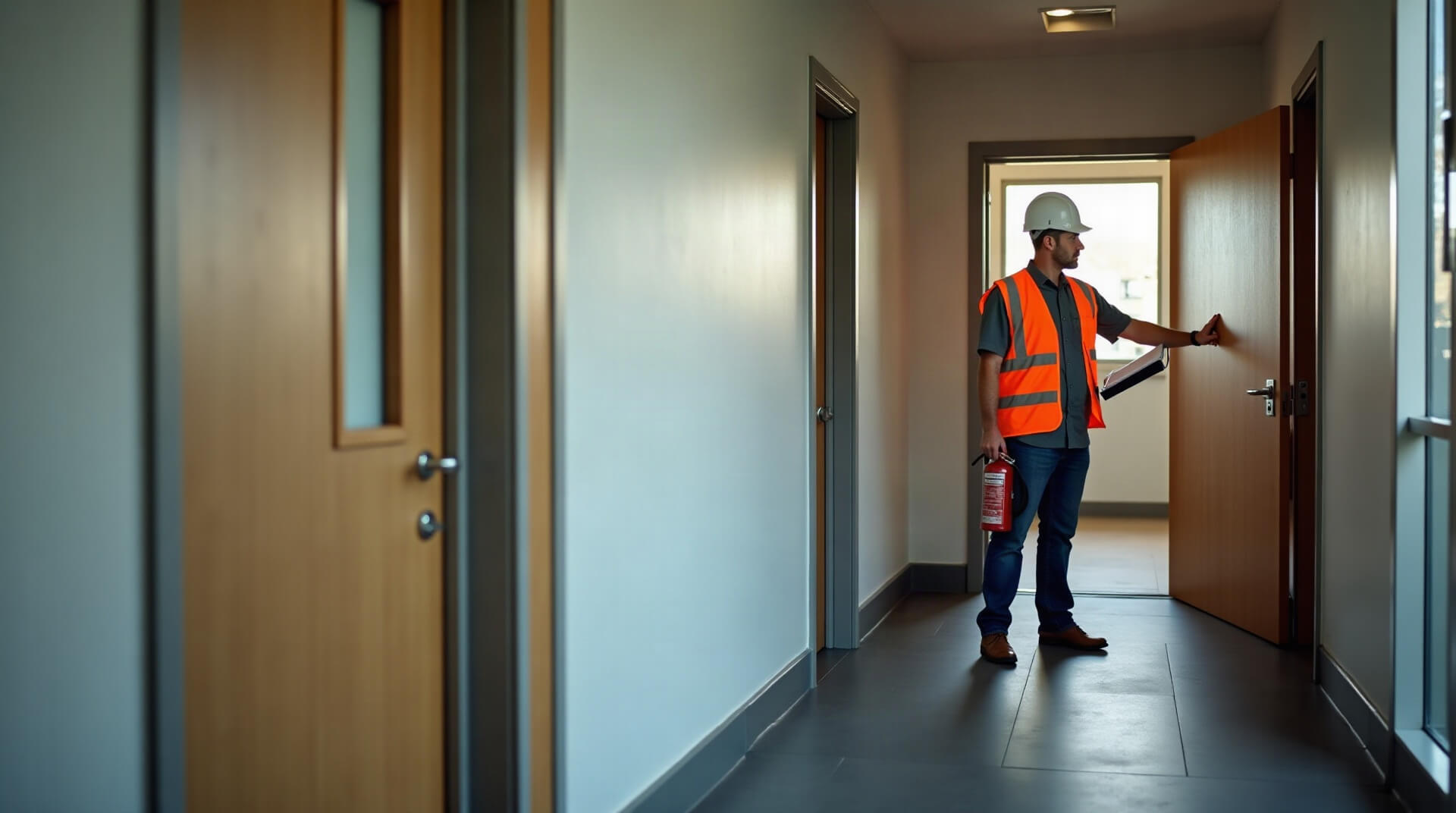
Since the Grenfell Tower tragedy, fire risk assessments (FRAs) have moved from a compliance afterthought to the single most scrutinised document in block management. For managing agents, freeholders and Right to Manage companies, understanding what a compliant FRA actually involves — and where the common failures lie — is now essential, not optional.
With the Fire Safety Act 2021, the Fire Safety (England) Regulations 2022, and the Building Safety Act 2022 reshaping the regulatory landscape, the margin for error has narrowed considerably. This article sets out the different types of fire risk assessment, who is legally responsible for commissioning them, and the mistakes that continue to land responsible persons in front of enforcement bodies — and occasionally the courts.
The Legal Framework: Who Is Responsible?
The Regulatory Reform (Fire Safety) Order 2005 (RRO) remains the primary legislation governing fire safety in the common parts of residential blocks. It places a duty on the "responsible person" — typically the freeholder, landlord, or managing agent acting on their behalf — to carry out a suitable and sufficient fire risk assessment of all non-domestic parts of a building.
The Fire Safety Act 2021 clarified a point that had caused years of confusion: external walls, cladding systems, balconies, and flat entrance doors fall squarely within the scope of the RRO, not just the communal areas. This means FRAs commissioned before 2021 covering only stairwells, lobbies and plant rooms are very likely now inadequate.
Layered on top of this, the Fire Safety (England) Regulations 2022 introduced additional statutory duties for high-rise and multi-occupied residential buildings, including:
- Monthly checks of lifts intended for use by firefighters
- Annual checks of all fire doors in communal areas, and quarterly checks of flat entrance fire doors in buildings over 11 metres
- A requirement to share FRA findings with residents and provide fire safety instructions
- Mandatory submission of information to local fire and rescue services for buildings over 18 metres
The Main Types of Fire Risk Assessment
Not every building requires the same depth of investigation. FRAs are typically categorised using the PAS 79 methodology, which most competent fire risk assessors in the UK follow:
- Type 1 — Common Parts (Non-Destructive): A visual inspection of communal areas only, without opening up walls, ceilings or floors. Suitable for lower-risk, lower-rise buildings but increasingly viewed as insufficient on its own.
- Type 2 — Common Parts (Destructive): Involves limited intrusive inspection, such as opening ceiling voids or wall cavities, to assess compartmentation and fire-stopping where there is reasonable suspicion of a problem.
- Type 3 — Common Parts and Flats (Non-Destructive): Extends the assessment into individual flats on a sample basis, without intrusive investigation.
- Type 4 — Common Parts and Flats (Destructive): The most comprehensive assessment, combining intrusive investigation of communal areas with sampled intrusive inspection within flats. This is generally reserved for buildings with known or suspected fire safety defects, such as those with ACM or other combustible cladding.
Following the Fire Safety Act 2021, a specialist assessment of external wall systems (often referred to as an EWS1 assessment, though this is a lender-driven valuation tool rather than a strict legal requirement) may also be needed where cladding or balconies pose a potential risk.
What a "Suitable and Sufficient" Assessment Looks Like
The RRO does not prescribe a rigid format, but case law and guidance from the National Fire Chiefs Council (NFCC) and the Institution of Fire Engineers point to several non-negotiable elements:
- Identification of fire hazards and sources of ignition, fuel and oxygen
- Identification of people at risk, including vulnerable residents and those requiring a Personal Emergency Evacuation Plan (PEEP)
- Evaluation, removal or reduction of risk
- Recording of findings, action plan and prioritised timescales (significant findings must be recorded where five or more people are employed, but in practice almost all residential blocks should have a written record)
- A clear, well-communicated evacuation strategy — simultaneous evacuation, stay put, or a modified version — with evidence it has been reviewed following the Grenfell Inquiry's recommendations
- A review date, typically no longer than 12 months for higher-risk buildings
Crucially, the FRA must be carried out by someone deemed "competent" — with the right blend of qualifications, experience and ongoing CPD. The Fire Risk Assessment Competency Council's register is a useful starting point when vetting assessors.
Common Mistakes Managing Agents Must Avoid
Having reviewed hundreds of FRAs over the years, certain failures recur with depressing regularity:
- Treating the FRA as a one-off tick-box exercise. An FRA is a living document. If the building changes — new cladding, altered compartmentation, change of use to a flat — the assessment must be reviewed, not left to expire on its anniversary date.
- Failing to close out action points. Enforcement authorities, including the Health and Safety Executive for higher-risk buildings, are far more concerned with evidence of remediation than the existence of a report. An FRA littered with unresolved "high priority" actions from three years ago is a red flag.
- Using unqualified or underqualified assessors. Cost-cutting on FRA procurement is a false economy; an inadequate assessment offers no legal protection and may need to be redone entirely.
- Ignoring resident communication duties. Under the Fire Safety (England) Regulations 2022, residents have a statutory right to receive relevant FRA information. Failing to do so is itself an offence.
- Poor record-keeping and version control. When multiple contractors, directors and managing agents are involved over several years, it's alarmingly common for the current FRA, remediation evidence and fire door inspection logs to be scattered across inboxes and filing cabinets rather than held centrally.
- Overlooking interim measures. Where full remediation (such as cladding replacement) will take months or years, a suitable interim fire safety strategy — waking watch, simultaneous evacuation, alarm upgrades — must be documented and justified.
Getting Organised: Why Centralised Compliance Records Matter
With regulators, insurers, mortgage lenders and leaseholders all now entitled to ask pointed questions about fire safety compliance, the days of managing FRAs through spreadsheets and email chains are numbered. Platforms such as WiseBlock allow managing agents to log FRA review dates, track remediation actions to completion, and store evidence of fire door inspections and resident communications in one auditable place — making it far easier to demonstrate compliance during an HSE inspection or a sale-related enquiry.
Ultimately, a fire risk assessment is only as valuable as the action taken as a result of it. Choosing the right assessment type, appointing a genuinely competent assessor, and maintaining a disciplined, well-documented remediation process are the three pillars that separate a compliant building from one exposed to serious legal and reputational risk.
Ready to modernise your property management?
See how WiseBlock can transform your operations with a free 30-minute demo.
Schedule a Demo